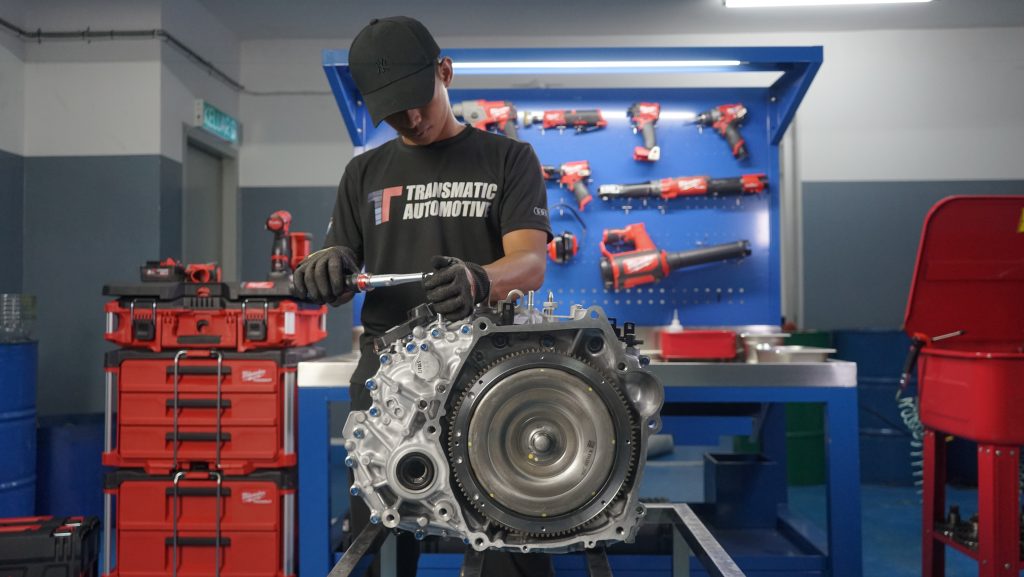
Transmission Maintenance
Transmission maintenance is essential to ensure the transmission system operates efficiently and remains in optimal condition. This process includes fluid inspection and replacement, filter servicing, and performance checks all aimed at preventing potential issues and avoiding costly damage in the future.
Common automotive issues faced by car owner
Unusual Sound or Noise
A clunking or humming noise when shifting gears may indicate a mechanical issue.
Fluid System Leak
It is easily identifiable by its reddish color and sweet scent. However, if left unchanged for too long, the fluid may darken and develop a burnt odor.
Illumination of the Check Engine Light (CEL)
The transmission warning light may illuminate without an immediately apparent cause, indicating the need for diagnostic evaluation.
Overheating System
Excessive overheating can occur due to low fluid levels, contaminated transmission fluid, or excessive pressure within the system conditions that may lead to more severe damage and costly repairs if not addressed promptly.
Recommended Preventive Procedures
Shift gears with care and precision
Avoid shifting gears abruptly or forcefully, especially when the vehicle is traveling at high speeds. Such actions can cause immediate disruption and potential damage to the transmission components.
Avoid placing excessive loads on the vehicle
Do not exceed the vehicle’s specified load capacity, as overloading places additional strain on the transmission and other drivetrain components, potentially leading to significant and costly damage.
Ensure regular transmission fluid checks and timely replacement
Ensure that the transmission fluid is regularly inspected and replaced in accordance with the manufacturer’s recommended schedule. Neglected or degraded fluid can reduce the efficiency of the transmission system and potentially lead to further damage.
Ensure proper gear selection for optimal performance
Avoid keeping the vehicle in an inappropriate gear, such as leaving it in ‘Drive’ (D) while stationary or shifting to ‘Reverse’ (R) while the vehicle is in motion. These actions can place unnecessary strain on the transmission system and may lead to premature wear or damage.
Periodic Inspection by Professionals
Ensure regular check-ups and scheduled transmission servicing by qualified mechanics. Early inspections can help identify potential issues before they develop into more serious and costly damage.
Inspect the air conditioning transmission system
Ensure the air conditioning transmission system is functioning properly. An overheated transmission can lead to air conditioning system failure, potentially resulting in further damage to critical transmission components.
Transmission FAQs
Typically, transmission fluid lasts between 50,000 km and 100,000 km, depending on the manufacturer’s recommendations. While some vehicles are equipped with ‘lifetime fluid,’ it is still advisable to have it inspected every 100,000 km to ensure optimal performance and prevent potential issues.
Common signs include rough or delayed gear shifting, a burning smell, or the illumination of the transmission warning light.
While it may be possible to continue driving, it is not advisable. Doing so can lead to further damage and may pose a safety risk if the transmission fails while the vehicle is in motion.
The duration depends on the type of service required. Fluid replacement typically takes around 30 minutes, whereas more complex transmission repairs may require several hours or longer to complete.
Neglecting transmission maintenance can lead to serious damage, potentially requiring costly component replacements. In some cases, it may also affect other critical systems within the vehicle.
